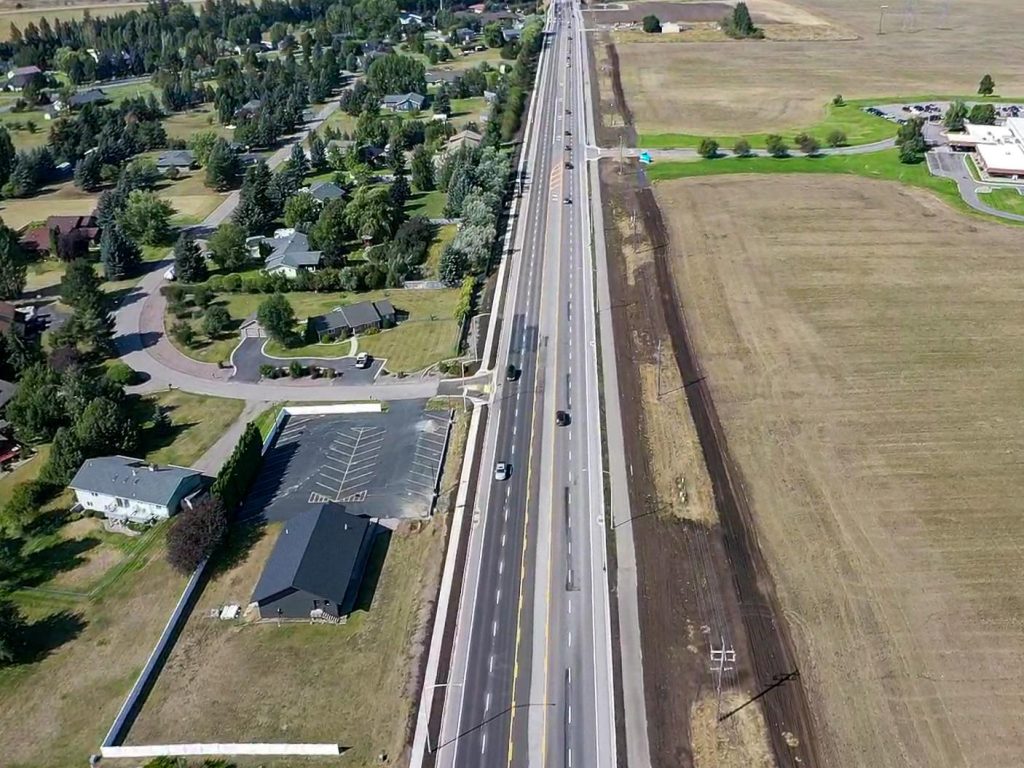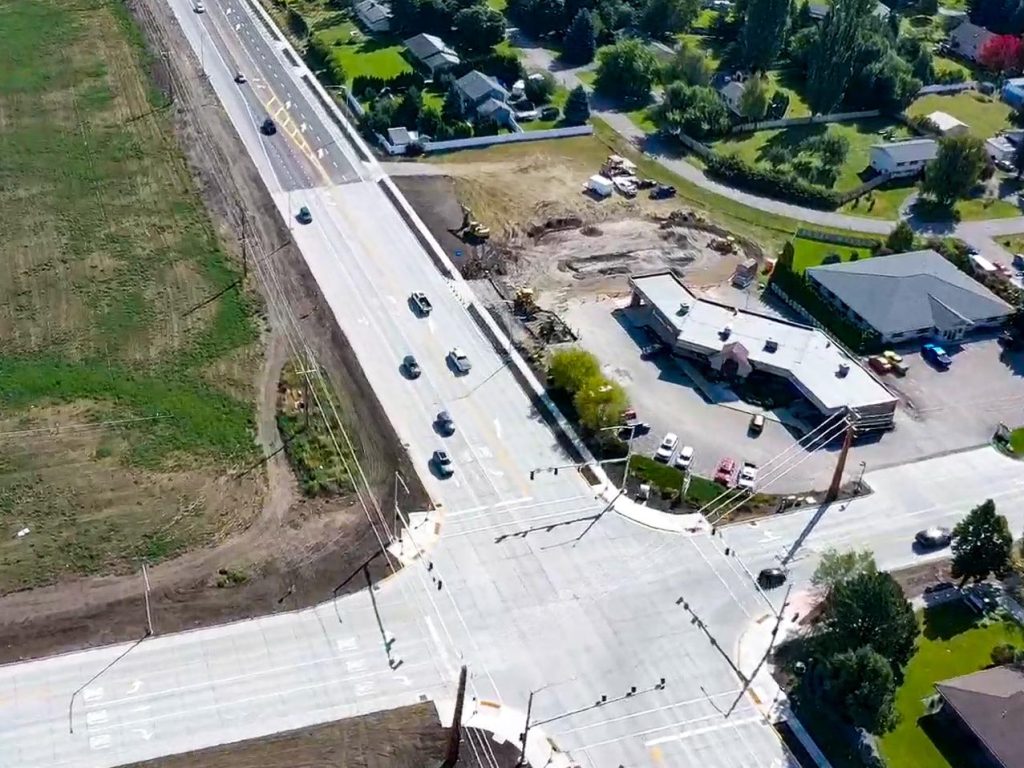
West Reserve Drive is one of only two east-west routes across the north end of Kalispell. In the fast-growing Flathead Valley, the corridor had outgrown its capacity: intersections were failing, and crashes had doubled in a decade. As design lead on Schellinger Construction’s design-build team, DJ&A reconstructed 1.25 miles of West Reserve Drive, 0.75 miles of Whitefish Stage Road, and the intersection where they meet, widening West Reserve from three to five lanes. DJ&A provided survey, design, and construction engineering and delivered an early-release package in about six weeks, so construction started a full season ahead of a conventional schedule. The corridor stayed open throughout and now includes Kalispell’s first continuous multimodal connection along West Reserve, tied into the Bypass trail network.
One Shared Trench for Every Utility
On most corridor projects, each utility owner relocates on its own schedule, and a single holdout can stall the whole job. DJ&A designed a single shared trench that Schellinger built in a single pass, then coordinated the locations of each utility within it. Brendan Elkins, DJ&A’s utility coordination lead, held meetings with the utility owners and MDT to determine spacing, sequencing, and access.
This approach took utility work off the critical path and removed a major source of schedule risk. It also provides MDT with a model for other public corridors where design-build delivery is still relatively new.
Keeping a Busy Corridor Open
West Reserve Drive links US 93 to US 2, ties into the Kalispell Bypass, and connects the Evergreen community to the commercial core along US 93. It carries 18,000 to 20,000 vehicles per day on the west end and 13,000 to 15,000 on the east, so closing it wasn’t an option. DJ&A’s phasing shifted lanes and access points as work progressed, keeping traffic moving through the work zone and across the bridge while crews widened it.
The team also worked directly with neighbors. DJ&A coordinated with Glacier Bank, which was designing a building expansion, to place approaches so the bank wouldn’t have to tear up new roadway later. When corridor businesses needed to keep access, the team added new approaches mid-construction. Consolidated access points now improve long-term safety, and Big Sky Public Relations kept drivers informed about lane shifts, traffic patterns, and schedules through public meetings, news releases, mail, and text and email updates.
Key Services
- Design-Build Design Lead
- Roadway and Intersection Design
- Bridge Approach and Deck Profile
- Storm Drainage and Water Quality Ponds
- Utility Coordination and Relocation
- Shared-Use Path, Sidewalk, and ADA Compliance
- Traffic Signals, Lighting, Signing, and Striping
- Survey, Right-of-Way, and Construction Engineering
Value Added
Shifting the widening north kept the project off dozens of private properties, avoiding acquisition costs and delays. Working with MDT on design exceptions, DJ&A limited each tie-in to what the context required, which avoided a full intersection reconstruction at the terminus. DJ&A also built the east and north ends to their future width, so MDT’s planned extensions will need only restriping. At the signalized intersections, concrete pavement resists rutting and cuts long-term maintenance.
The design protects the Stillwater River and its bull trout habitat. Roadway runoff passes through a multi-stage treatment pond before reaching the river, and utilities were bored about 8 ft. below the riverbed to avoid in-water work and future scour. Near the bridge, the team also avoided construction methods like pavement milling that could carry debris into the water.